
The Ultimate Men’s Clothing Measurement Guide: Mastering the Perfect Silhouette
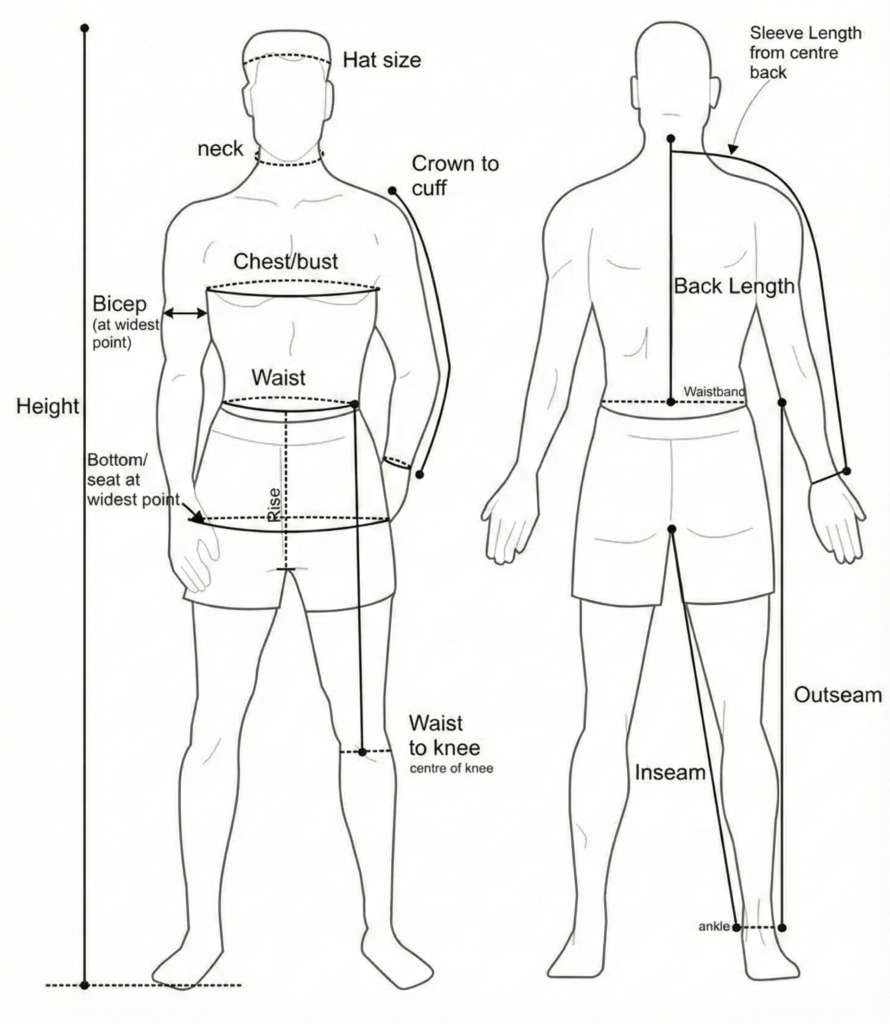
Shopping for luxury festival wear online is an exhilarating experience, but it often comes with a common hesitation: “Will it fit me perfectly?” At ZEVQ, we believe that true style is born from confidence, and confidence comes from a flawless fit. Whether you are looking for a structured jacket or a flowing, floor-length kaftan, understanding your body measurements is the key to unlocking your best look.
We have created this comprehensive Men’s Clothing Measurement Guide to remove the guesswork from your shopping experience. By taking a few minutes to measure yourself accurately, you ensure that every piece you order from ZEVQ arrives ready to wear, draping exactly as our designers intended.
Why Precision Matters in Festival Wear
Unlike standard high-street fashion, festival wear and luxury resort attire often feature unique cuts, extended drapes, and specific fabric behaviors. A ZEVQ Kaftan requires a precise length measurement to ensure it flows elegantly without dragging, while our fitted sleeves demand an accurate bicep measurement to allow for freedom of movement on the dance floor.
Preparation: Setting Up for Success
Before you begin, you will need a few simple tools to get the most accurate results:
- A Flexible Measuring Tape: Do not use a metal construction tape. A soft plastic or fabric tailor’s tape is essential for following the curves of the body.
- A Full-Length Mirror: This helps you ensure the tape is straight and parallel to the floor.
- A Trusted Friend: While you can measure some areas yourself, measurements like shoulder width and back length are significantly more accurate when taken by someone else.
Pro Tip: Measure yourself while wearing only underwear or very thin, skin-tight clothing. Bulky sweaters or jeans will distort the numbers and lead to an ill-fitting purchase.
Step-by-Step Measurement Guide
1. Chest: The Foundation of Fit
This is the most critical measurement for jackets, shirts, and tunics. Lift your arms slightly and wrap the tape measure around the fullest part of your chest, placing it just under your armpits. Ensure the tape is flat across your back and level with the ground. Relax your arms down before noting the number. Do not puff out your chest; stand in your natural posture.
2. Waist: Natural vs. Trouser Waist
It is important to distinguish between your “natural waist” and where you wear your trousers.
Natural Waist: Measure around the narrowest part of your torso, usually just above the belly button.
Low Waist/Waistband: For trousers or kilts that sit lower, measure around the point where you normally wear your belt.
3. Shoulder Width: Defining Structure
This measurement dictates how a garment hangs on your frame. Locate the bony point at the edge of each shoulder (the acromion bone). Measure the distance from one shoulder tip, across the curve of your upper back (nape of the neck), to the other shoulder tip. This ensures that seams sit perfectly on the edge of your shoulder, not sliding down your arm or pinching your neck.
4. Sleeve Length
To determine the correct sleeve length, stand with your arm slightly bent—imagine your hand is resting comfortably in your pocket. Measure from the shoulder bone mentioned above, down along the outside of the arm to the elbow, and continue to the wrist bone. This method accounts for the fabric needed when you bend your arm.
5. Bicep: The Secret to Comfortable Movement
Many standard size guides overlook this detail, but at ZEVQ, we know it is vital. If you work out or have naturally larger arms, a standard sleeve might feel restrictive.
How to measure: Let your arm hang relaxed at your side. Wrap the tape measure around the widest part of your upper arm (the bicep muscle). If you plan to dance or move vigorously, you might want to flex slightly to ensure the fabric won’t be too tight when you are active.
6. Shoulder to Hem: Essential for Kaftans & Robes
For our signature floor-length pieces, the “Shoulder to Hem” measurement ensures elegance without tripping hazards. This is different from “Back Length.”
How to measure: Place the start of the tape at the highest point of your shoulder (where the shoulder meets the neck). Let the tape drop straight down, passing over the fullest part of your chest, all the way to the floor or your desired length.
Crucial Note: If you plan to wear platform boots or chunky festival footwear with your kaftan, put them on while measuring! This ensures the hemline sits exactly where you want it relative to your shoes.
Understanding Ease and Fit Styles
Once you have your numbers, compare them with the ZEVQ Size Chart. However, keep the “fit intent” in mind:
- Slim Fit: The garment is cut to follow the body’s contours closely. Choose a size where your measurement is close to the max range.
- Oversize / Relaxed Fit: Common in our kimonos and festival tops. These are designed to be larger than your body measurements to create a draped aesthetic.
For more detailed information on international size conversions (US, UK, EU), you can refer to authoritative resources like Wikipedia’s Clothing Sizes Guide to double-check standards.
Still Unsure? Let Us Help.
We want your ZEVQ experience to be seamless. If your measurements fall between sizes, or if you have specific proportions (like broad shoulders or athletic biceps) that worry you, our styling team is here to assist.
Simply email your measurements to info@zevq.co.uk, and we will recommend the perfect size for your chosen design. Ready to find your new look? Browse our latest collection here.